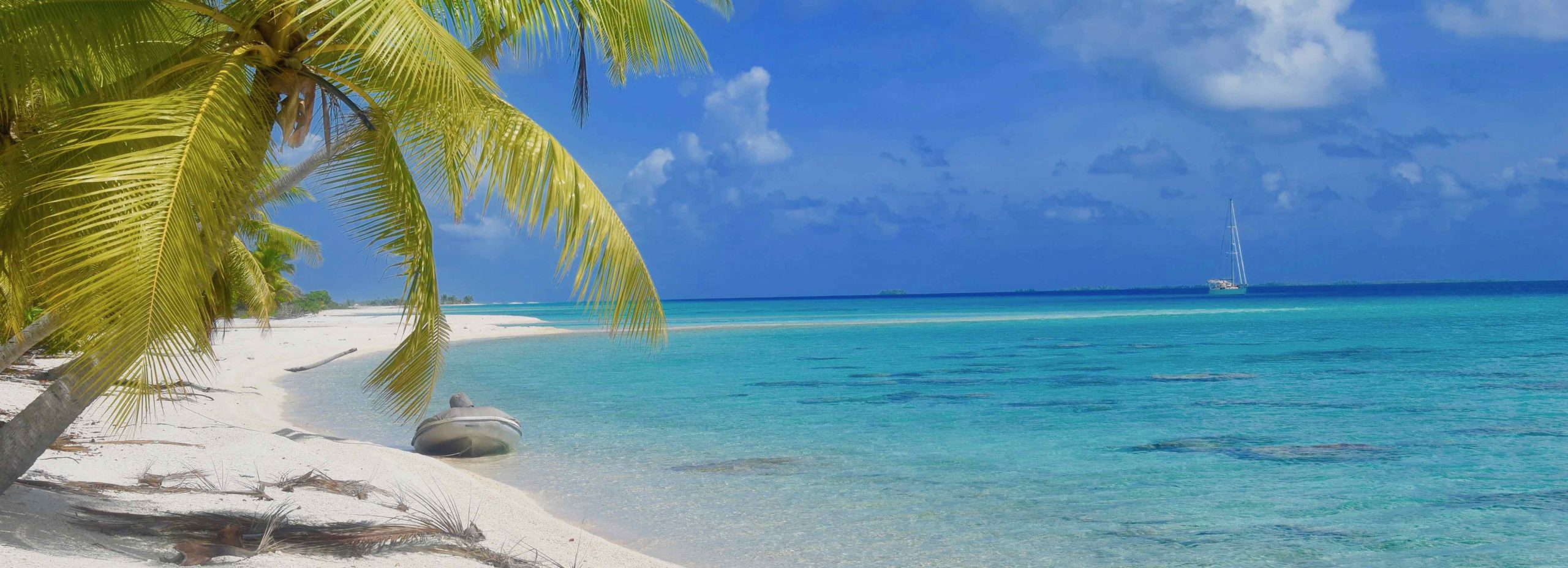
About a week ago, we asked for suggestions for a dinghy name. What a creative bunch of friends and followers we have – there were a lot of great (and funny) submissions!
Here’s the list in its entirety:
Dingus
Englebert H.
Dink
3 Hour Tour
Floatie
Boaty McBoatface
Giddyup
Mighty Mouse
iDink
Whoopee Cushion
SS IPA
Gadabout Jr.
Little Gaddy
Belafonte
Dirty Rascal
Stinky Dinky
Everyone’s a winner, but we had to choose only one. And the honor goes to…
Englebert H. (Humperdinck)
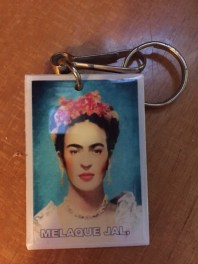
The winner will receive this custom Frida keychain straight from Melaque, Mexico! We’re sure she’ll be anxiously awaiting the postman.
And to everyone who participated in this little bit of fun, here’s your participation trophy. 
Seriously, thanks for the suggestions. And thanks for sharing in this adventure with us!
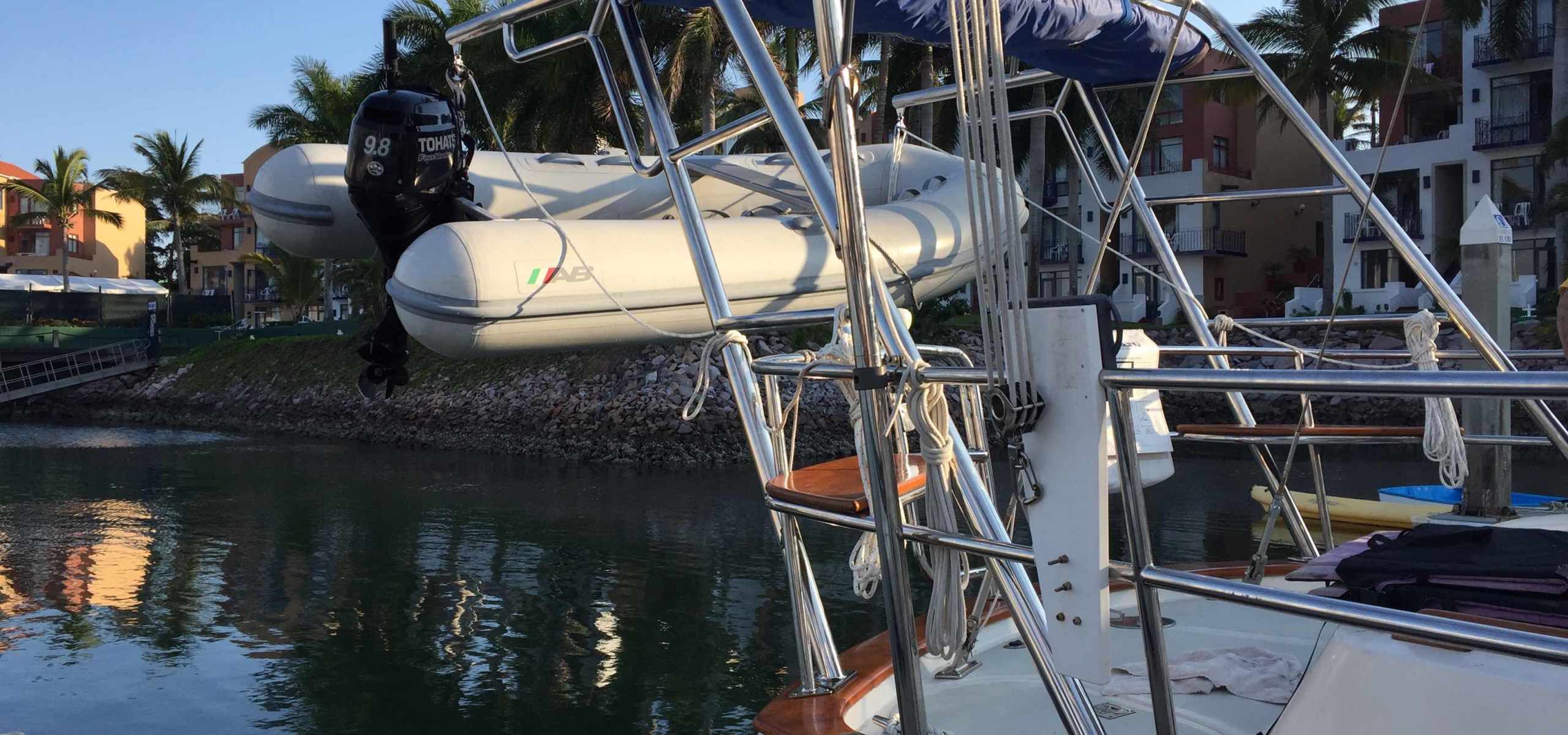
Actually, we built a large stainless steel arch on the back of Gadabout. Okay, so it’s not a “garage” in the traditional sense, but we do store our dinghy (aka, water pick-up truck) and other assorted stuff there, so for all intents and purposes it is a garage. And for further clarification, when I say “we built” I actually mean “we financed and supervised.” Small details for sure, but they say that’s where the devil is.
For the less than nautically inclined, an arch on the back of the boat serves multiple purposes. It is where additional solar panels will be mounted; it has davits (lifting arms) off the stern which are used to hoist the dinghy (we really need to name that thing); and we built it with room to strap our surfboards underneath the top. Clearing the dinghy and surfboards off the foredeck has made life much easier, and with the davits it is now quick and easy to hoist the dink out of the water each night, which prevents it from being stolen.
First, we mocked up the design with PVC. Next, the entire arch was fabricated onboard with tack welds. The structure was taken back to the shop for final welds and polishing then brought back, hoisted, and bolted in place. The entire process took about three weeks.


I know there are purists out there (you know who you are) who will decry an altering of a sailboat’s aesthetic lines as pure sacrilege and those of ya’ll without sin can cast the first stone, but we are very happy with the final product and the options it gives us.


p.s. If anyone has a suggestion for a name for the Dinghy please send it our way!
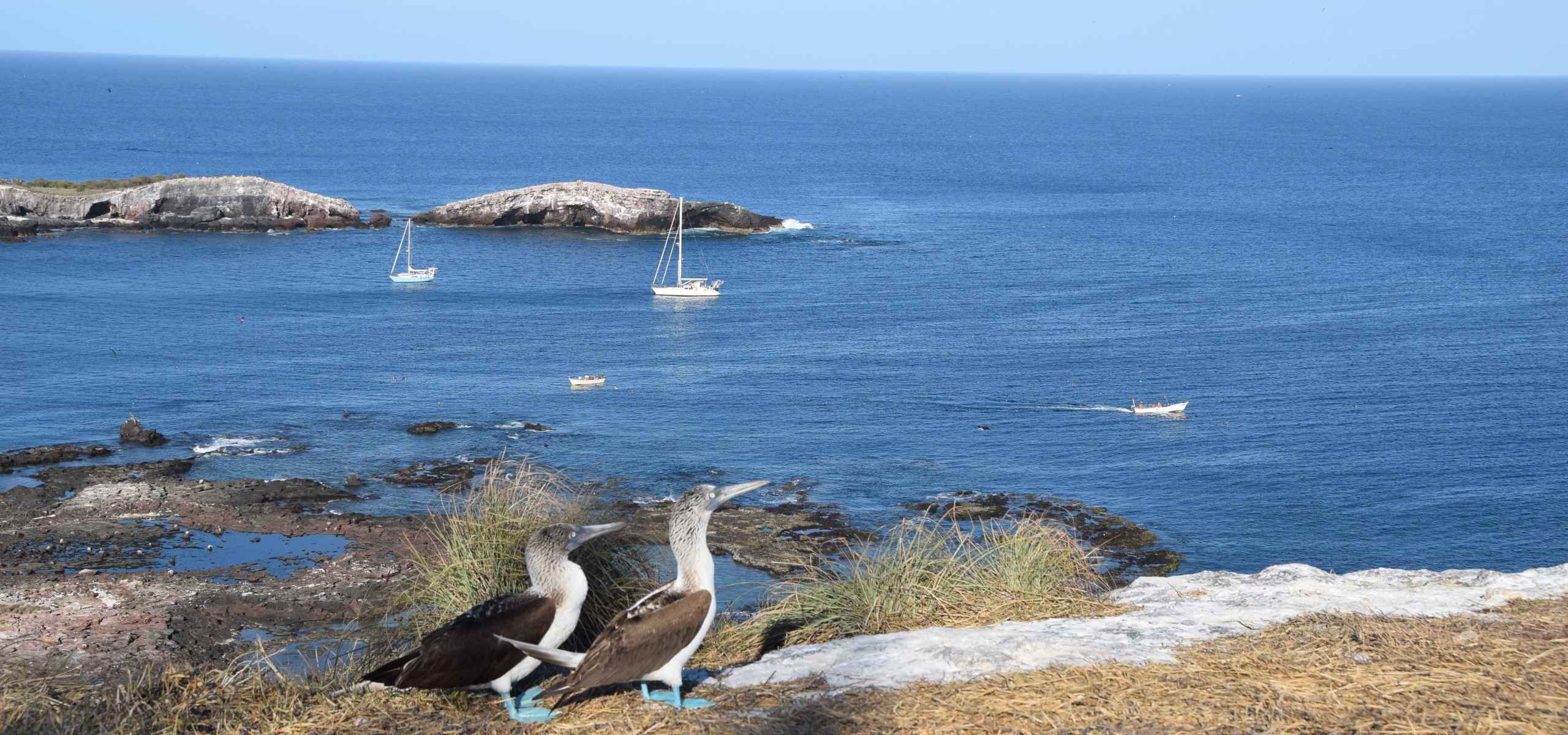
An overnight sail from Mazatlan brought us to Isla Isabel, a small island 18 miles off the Pacific coast of Mexico. Isla Isabel is a national park and, as of 2003, a World Heritage Site. It is nicknamed the “Galapagos of Mexico” because of the large number of nesting birds and iguanas that inhabit the island.


Frigate birds, boobies (blue-footed, brown and red-footed varieties), brown pelicans, white-tailed tropic birds, Heerman’s gulls, sooty terns, and brown noddies fill the shores and air.


There is also an active fish camp and a tourist eco-camp on the island. This is no cushy resort, though. Unless you have your own boat, the trip is a 40-mile open panga ride from the nearest town of San Blas.


We anchored, caught up on our sleep and, after a little snorkel exploration, took the dinghy ashore.


Due to the lack of natural predators, the birds are unafraid and willing to allow people to get very close.


A short hike to the lighthouse put us right in the middle of a blue-footed booby colony. We watched as the birds interacted, communicating via whistles and croaks, the males trying to impress the females with their dance moves. It was like an avian version of Saturday Night Fever, and we were front and center.


One particularly amorous pair even cooperated for this short video (apologies for the wind noise – we promise a better video camera is coming soon). Enjoy the show!
We didn’t plan to spend seven weeks in Mazatlan. In fact, we planned to be there for only one week, but life is like that… plans change and flexibility is the key to new opportunities. We stayed longer to have a boat project completed (to be covered by Wags in a separate entry), which turned into another boat project and a quick trip back to the States to renew our Mexico visitor permits.
The extra time in Mazatlan gave us the chance to make some new friends, volunteer with the local animal shelter (Amigos de los Animales),


and see and do so much that this city has to offer. There are beautiful plazas and the basilica:


The public market with its fresh produce and yummy street side food vendors:


Stunning natural scenery:


Architectural and cultural sites:


And every thing in between:


Sometimes we have to remind ourselves to slow down. This time we did.
Carnaval Mazatlan is one of the most popular carnival celebrations in Mexico. We were excited to be in town as we had heard it is a must-see. The week leading up to Ash Wednesday is a constant stream of events, from pageants and concerts to fireworks and parades. We decided the main parade on Sunday would be our best opportunity to join the festivities.
Getting into town from the marina was painless. We caught the bus and 40 minutes later we were downtown and twenty pesos (about one US dollar) poorer. We walked to the malecon, the oceanside street where the parade takes place, and with a half hour to start time the crowds were filling in fast.


After choosing a spot to stand, we quickly discovered we would be able to see only the higher aspects of the parade as neither of us is above average on the height scale. Wags noticed several people with small wooden stools and, leaving me with my promise to stay put (so we wouldn’t lose each other), he headed off to find the enterprising person selling them. Upon his return we stepped onto our new, 2-foot-high, extremely wobbly viewing platforms where we would spend the next two hours taking in the sights and sounds of Carnaval Mazatlan 2017. Luckily, there was a temporary, slightly more stable, metal fence just behind us to assist in our balancing act.


The parade began as the sunset provided a beautiful backdrop. With this year’s theme, “de Alebrijes y Dragones,” very colorful dragons dominated the floats and dancer outfits.


As darkness fell and the parade progressed, the floats became bigger and more vibrant and confetti filled the air.


The crowd was massive, the mood festive, and the energy contagious. It was a blast to see people young and old alike sharing in the celebration – everyone was there to have fun. We even got to practice our Spanish with a man standing next to us who was there with his wife and daughter.


After the last float and the brigade of dancing horses brought up the rear of the parade the crowd dispersed and we walked to a nearby restaurant for dinner. A few stragglers stayed behind enjoying the warm evening, one señor taking a much-needed rest on his own wobbly stool. By the time we were finished with our dinner, the brigade of sweepers had already erased much of the evidence of the parade.


The celebration continued, however, on the side streets and in local homes, restaurants and clubs, for two more days and nights, until the beginning of Lent brought an end to this year’s carnival.
The main reason for our trip to the small working port of Topolobampo was to stretch our legs and venture inland. We left the boat in the secure marina and headed to nearby Los Mochis, where we caught the train, “el Chepe,” and embarked on what is hailed as one of the most scenic train rides in the world. The route winds its way into the Copper Canyon, Mexico’s version of the Grand Canyon in the US (but an area four times larger).
With 37 bridges, 86 tunnels, and even a full 360 over itself to gain altitude, the train ride itself is spectacular. Stops in several small towns give a glimpse into local life along the way.


One of the stops is Divisidero, a stop without a town, where you can hop off the train to see the canyon (Clark Griswold style), grab a quick bite to eat – numerous vendors sell gorditas (tortilla pockets stuffed with cheese and other yummy fillings) – and browse the local handicrafts.


Our end point in the canyon was the town of Creel, located at 8000 ft. This area is home to the Tarahumara Indians, who are known for their ability to run extreme distances. We found them to be shy and reserved but friendly people. The weather was cool and beautiful and we took the opportunity to visit one of the nearby Tarahumara communities and the 18th century San Ignacio Mission.


On the way back we spent the night in El Fuerte, founded in 1564. It is the birthplace of Zorro and home to one of Latin America’s last remaining dry tropical forests. Its location by the Rio Fuerte makes it an oasis in the midst of the surrounding dry, arid landscape. In town are numerous old mansions that have been turned into boutique hotels, each quite charming and unique.


Our visit coincided with that of a regional dignitary, too, so we got to catch the local parade in his honor, complete with caballeros and dancing horses!
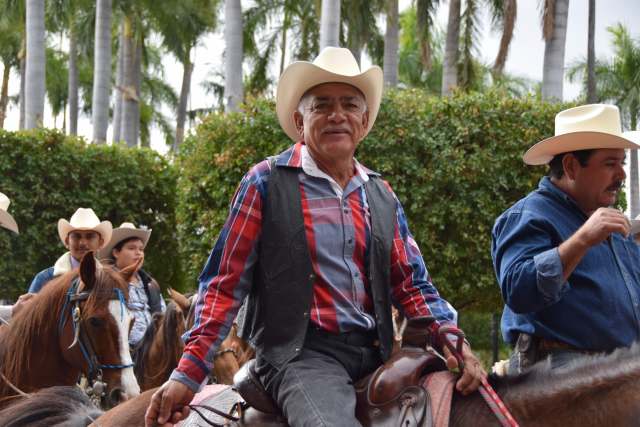
One thing we took away: 3 days was too short. We would love to return to explore more of the towns and spend time hiking and biking in the canyon. This was a tasting menu of a trip, for sure.
As the number on the depth finder started rapidly decreasing, I tried to reassess my route while asking Wags for a sanity check. 7 ft… 6 ft… 5 ft… “It’s getting shallow quickly!” 4… 3… 2… Gadabout slid to a halt in the soft sand bottom just outside the channel. We were aground.
After an overnight crossing of the Sea of Cortez to the mainland, we arrived at Topolobampo where we planned to leave the boat while we took the train inland to explore the famed Copper Canyon. To get to the marina we had to leave the main channel and negotiate a secondary channel. There are channel markers in place but the channel is not depicted on the electronic charts, only in one of the guidebooks showing the general path, a path which appears to cross areas much shallower than our 6-ft draft. We were motoring along between the channel markers at about 5 knots. I was at the helm with the next set of markers firmly in my gaze (I thought) and Wags was focused on shore, trying to identify the correct marina through his binoculars, when we came to our abrupt halt. I immediately put the engine in reverse and, luckily, was able to back off without any damage, other than to my ego, as a panga full of fishermen pointed out our error – I had missed a right-hand turn in the channel. Adrenaline still pumping, I guided Gadabout back into the channel and proceeded, SLOWLY, with Wags on the bow keeping a close lookout, until two shrimp boats – yes, they also got to witness the entertaining scene – passed us and provided a clear picture of the way ahead. To our surprise, there were a couple of times the shrimpers went outside the channel markers, their local knowledge serving as a proof point of the constantly shifting bottom.
An hour later, securely in our slip at the marina, we toasted our good fortune – a sand bottom, helpful locals and no damage. There’s a saying that goes, “You haven’t been around until you’ve run aground.” Well, now that we’ve been around, there’s no need to do it again.
— Paula

From La Paz, we headed north to explore some of the islands and anchorages along the east coast of the Baja California peninsula. Each place was beautiful and unique.
Isla San Francisco offered turquoise blue water, a fun hike and a nightly display of jumping manta rays:


San Evaristo was a charming fishing village with Lupe Sierra and Maggie Mae’s, a wonderful little watering hole where we enjoyed fresh ceviche and cold cervezas while watching the waterside activities and painting a seashell to be hung in the bar for posterity:


In Timbabiche we explored the beautiful mangrove lagoon and snapped a few pictures of the once majestic Casa Grande:


Aqua Verde was a treat with roaming goats, a quiet fishing village and a tienda (store) selling queso fresca (fresh goat cheese):


Puerto Escondido provided a stopover for laundry, provisioning and a place to park the boat while we took a day trip to nearby Loreto:


Our last stop was Isla Carmen, the main attraction of which is Bahia Salinas, where a now defunct salt mining operation once thrived. There is still a caretaker and an active hunting lodge on the island, and the remnants of what once was make for an interesting walk ashore:


There’s much more to see in the Sea of Cortez and we could spend years exploring the area but it was time for us to make the jump to the mainland.
It is our last night in La Paz, Mexico. After a long day of pre-departure errands, we’re on the boat with a glass of wine, watching Pete the Pelican, a nightly visitor, fish from the dock. We’ve spent the last six weeks in La Paz, which is actually about four weeks longer than we originally planned. Plans change when you’re cruising, however, and as we got to know La Paz, it was an easy decision to stick around longer.
With a population of approx. 200K, La Paz is the capital city of Baja California Sur (the southern half of the Baja peninsula). It offers a great blend of culture, art, restaurants and activities, while maintaining a laid-back feel. The people we’ve met are friendly and welcoming, always willing to lend a hand or help us with our “muy malo” (very bad) Spanish. The town’s main tourist draws are the whale sharks – swimming with them is an amazing experience – and trips to the Espiritu Santos islands 20 miles off the coast. On land, one of the best activities is a simple stroll along the malecón, the town’s waterfront. With shops and restaurants on one side of the street and a tiled pathway on the other side, it is alive with people jogging and cycling, children playing, and families and friends enjoying time together.


Another of our favorites in La Paz has been discovering the art around town. Here, it’s not as simple as going to an art gallery and gazing at the paintings and sculptures. The paintings and sculptures are everywhere – some out in the open, some tucked away on a side street, some disguised as graffiti covering entire walls, and some hidden in plain sight in vacant lots turned parks that are easy to miss if you’re not paying attention.


This is a special place. There’s a saying that “the La Paz bungee cord is strong.” We get that. By boat or by land, we’re certain we’ll be back again someday.


The whale shark (tiburon ballena, in Spanish) is the world’s largest fish, reaching lengths of 40 feet or more. Whale sharks have very large mouths and are filter feeders. They feed almost exclusively on plankton and, therefore, despite their size, are completely harmless to humans. They also play friendly host to other fish, such as the remora, or suckerfish, which often hitches a ride. We recently had a unique and amazing opportunity to swim with these creatures in La Paz. Be sure to check out the video!


 Gadabout Life
Recent Comments